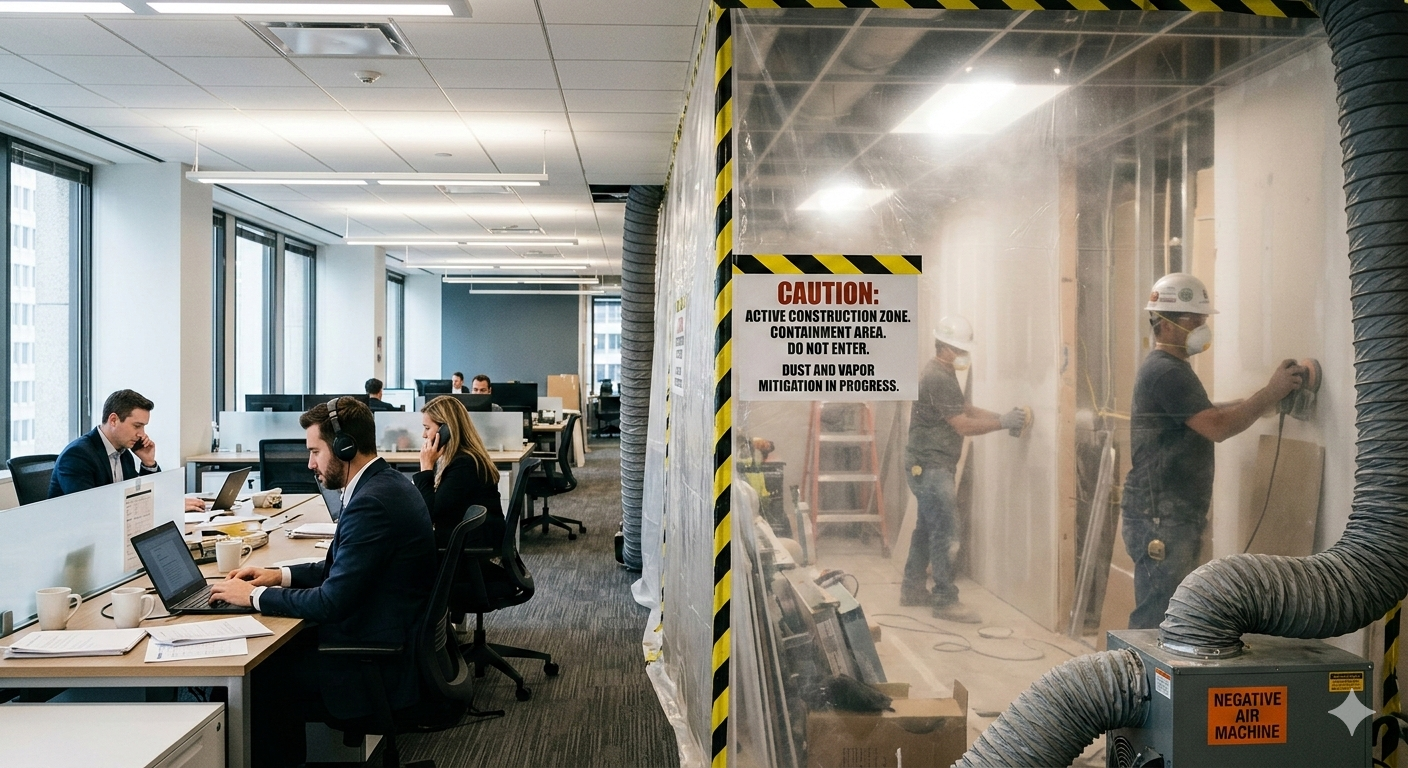
Construction activities such as demolition, cutting, welding, equipment operation, and the use of solvents or coatings can contaminate indoor air if not properly controlled. Generally, contaminants of concern include carbon monoxide, volatile organic compounds (VOCs), and airborne dust particulates. Each of these contaminants can cause negative health effects after acute or chronic exposure. Carbon monoxide is particularly dangerous because it prevents oxygen from being carried through the bloodstream. VOCs can cause eye irritation, headaches, and general discomfort. High concentrations of dust particles can cause respiratory irritation and even permanent lung damage.
Additionally, many office and residential buildings request regular
IAQ monitoring, even when no construction is underway. This allows building owners to stay on top of occupant health and identify any building issues that need to be addressed. Temperature, relative humidity, and mold spores may also be considered to provide additional context about the HVAC system and its impact on contaminant movement. When examined together, these parameters provide a broad snapshot of air quality conditions influenced by common construction activities.
Baseline IAQ Survey
To ensure that construction activities do not adversely affect building occupants, Cashins & Associates, Inc. conducts
IAQ surveys before, during, and after active work. Before starting a project, a baseline IAQ survey assesses the building's existing conditions. This serves as a reference point for differentiating construction-related impacts from other sources of indoor air pollution. Without an accurate baseline IAQ, it is challenging to establish appropriate site limits, which are essential for guiding the construction team on the level of controls needed.
Based on the initial measurements, we will set the air quality limits for construction activities. In some situations, different areas within the same building might need separate site limits because of specific conditions or functions. For example, a building’s basement can have higher dust levels before construction due to infrequent cleaning, poor airflow, or the building's age. Conversely, the upper floors may have much less dust than the basement. Similarly, a dedicated laboratory might have higher levels of VOCs compared to office or lobby spaces. The baseline IAQ survey records the conditions in your client’s space before your work begins.
Follow-up IAQ Survey
Once construction begins, it is vital to conduct frequent monitoring to identify and resolve IAQ issues promptly. If poor indoor air quality remains unaddressed, it could lead to complaints from building occupants and even cause work stoppages. Cashins utilizes real-time monitoring equipment that enables immediate adjustments to controls or work practices if elevated readings are detected. By using real-time data, a Cashins inspector can swiftly identify the source of contamination and advise the site supervisor on where to focus their controls. This proactive method reduces downtime, minimizes disruption to building operations, and helps ensure compliance with project-specific health and safety standards.
In most cases, multiple follow-up
IAQ surveys are performed to ensure compliance throughout all project phases. The frequency of these surveys depends on the project's length and changes in work activities. Some projects will require more monitoring early on, but survey frequency can be decreased once it is confirmed that contaminants are kept at acceptable levels. Typical IAQ survey intervals are weekly, bi-weekly, or monthly.
Conducting regular
IAQ surveys helps building occupants and contractors feel confident about the indoor air quality. Documented IAQ monitoring provides objective proof that proper controls are in place and effective. This data can demonstrate due diligence, lower liability, and facilitate clear communication with building owners and occupants. Instead of relying only on visual observations or assumptions, contractors can use measurable data to verify their protective measures.
Closeout IAQ Survey
At the end of a project, the results of a final
IAQ survey can indicate whether a completed construction area is ready for occupancy. Before a renovated area is closed out and turned over to the building owners, it should be free of airborne contaminants. The incoming occupants should feel safe and comfortable in the newly completed space. The goal is to protect occupants while minimizing disruptions and liability during construction and renovation activities.
The closeout IAQ Survey records the condition of the space after all construction work is finished. This final data can be compared to the baseline to ensure the renovation did not impact the space. This is important information in case an air quality complaint arises weeks or months after the renovation is completed.
Indoor air quality surveys before, during, and after construction are essential for a successful project. These surveys show the building owner and occupants that their health and safety are a priority. As a business owner, they also help ensure your staff’s productivity remains unaffected by the renovation. These surveys benefit and safeguard all stakeholders involved in the renovation process.
Are you planning a renovation project? Click the button below to get in touch with an expert who can let you know how we can help keep a safe and healthy environment during this disruptive work.